Sustainability-related disclosures for Fortibus 10 Coöperatief U.A.
Last updated November 2026
Summary
Fortibus 10 Coöperatief U.A. (“the Fund”) falls under Article 8 of the SFDR. The Fund is managed by Capital Mills Invest B.V. (“the Manager”). This Fund promotes environmental or social characteristics, but does not have as its objective sustainable investment.
The Fund provides revenue-based financing (RBF loans) to technology companies established in Europe. The Fund promotes one environmental characteristic, Digital Environmental Footprint (DEF), relating to the environmental impact of digital activities, and one social characteristic, Diversity & Inclusion (D&I), relating to a diverse workforce in an inclusive working environment. To this end, the Fund requires plans and progress reporting, but no minimum environmental performance or diversity target.
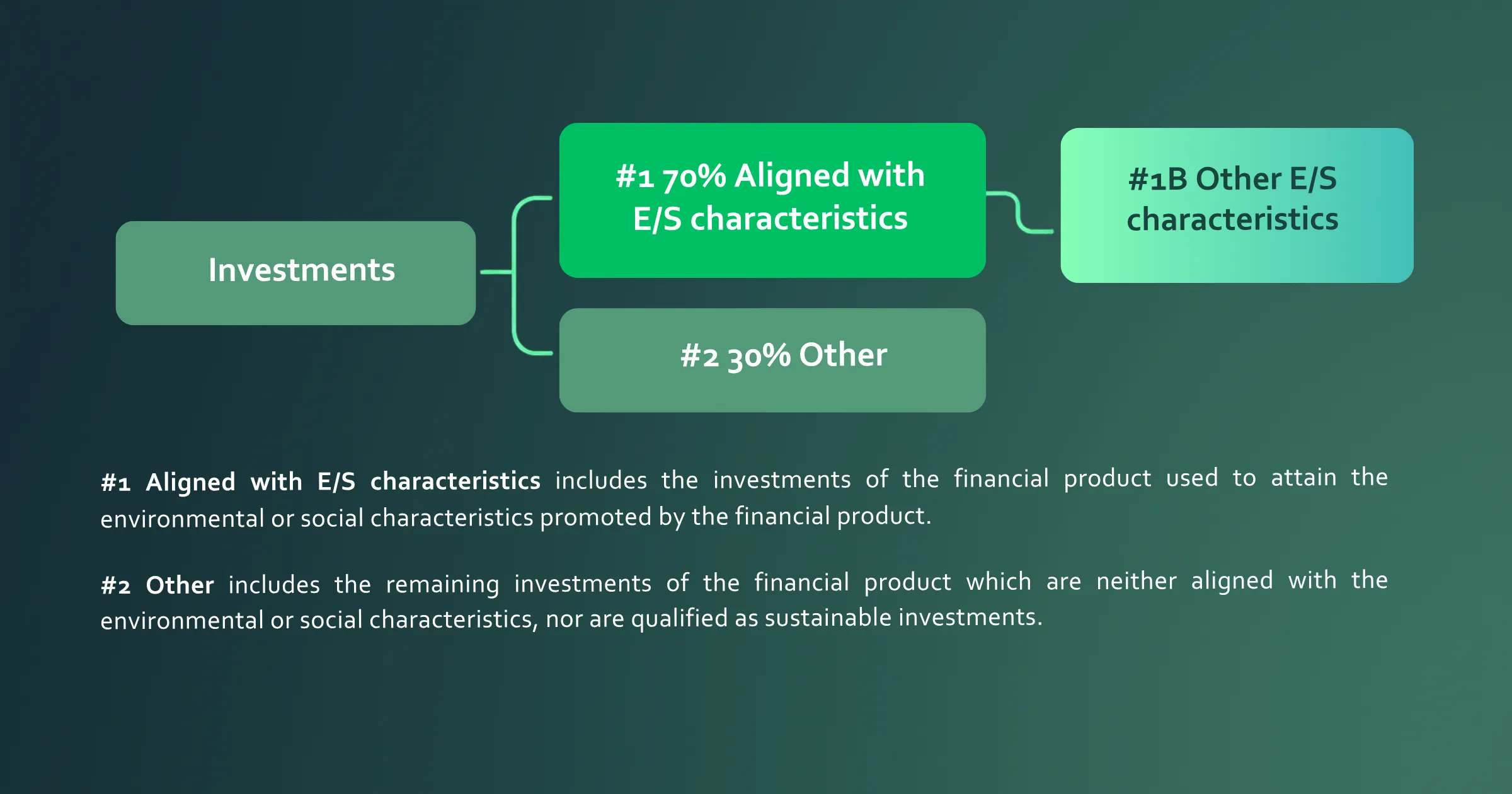
At least 70% of the outstanding principal goes to companies that have a DEF plan and a D&I plan, or that commit to adopting these within 12 months. This percentage is calculated and tested on the end date of the investment period. A maximum of 30% falls under “Other”. The proportion of sustainable investments and taxonomy-aligned investments is 0%. The Fund assesses progress against the baseline measurement annually. Loans are only provided to companies that follow good governance practices, assessed using a four-part checklist.
The Fund measures the characteristics using one primary indicator (the proportion that meets the binding element) and seven supporting indicators: four for DEF and three for D&I. The characteristics are attained if at least 70% of investments relate to companies that meet the primary indicator. For the supporting indicators, the Fund also reports on developments relative to the baseline measurement.
Borrowers submit their DEF and D&I plans and report annually on the supporting indicators. These data are self-reported and are checked for completeness and plausibility, but are not independently verified. No estimated data are used. The Manager does, however, carry out a high-level assessment of whether the DEF and D&I plans are appropriate.
Before each loan, the Manager carries out due diligence, including screening against the exclusion criteria, the baseline for DEF and D&I, and good governance. An investment decision is only taken if the due diligence is completed positively. Engagement takes place through the DEF and D&I plans and the arrangements and pricing incentives in the loan agreement.
No sustainable investment objective
This Fund promotes environmental or social characteristics, but does not have as its objective sustainable investment.
Environmental or social characteristics of the financial product
Environmental characteristic – Digital Environmental Footprint (DEF). DEF concerns the environmental impact of developing and delivering digital products and services. The Fund encourages companies to gain insight into, and work on, the environmental footprint of their digital activities, including the use of (external) cloud infrastructure, data centres, computing power and AI workloads.
Social characteristic – Diversity & Inclusion (D&I). D&I concerns a company’s ability to attract, retain and support a diverse workforce in an inclusive and respectful working environment. The Fund encourages companies to work towards equal opportunities, diversity of perspectives and a workplace culture in which employees feel welcome and valued, regardless of background, gender or other personal characteristics.
The Fund promotes these characteristics by requiring plans and progress reporting. The Fund does not require any minimum environmental performance (such as an emissions reduction) or any minimum proportion of women or other diversity target as a condition for financing.
Investment strategy
The Fund encourages portfolio companies to gain insight into and work on the environmental footprint of their digital activities (DEF) and on diversity and inclusion within their organisation (D&I). The investment strategy contains three binding elements: the baseline measurement, the DEF and D&I plans, and the annual reporting and engagement.
Before each loan, the Manager establishes the starting position (baseline) for DEF and D&I. At least 70% of the outstanding principal of all the Fund’s loans goes to companies that have a DEF plan and a D&I plan at drawdown, or that commit in the loan agreement to adopting these plans within 12 months of signing. Where relevant, the DEF plan contains targets and improvement actions relating to the responsible use of cloud and AI, supplier engagement, awareness of environmental impact and the efficient use of resources. Where relevant, the D&I plan contains targets and improvement actions relating to workforce diversity, an inclusive workplace culture, equal opportunities and attracting and retaining talent. If a company fails to adopt the plans in time, the pricing incentive under the loan agreement lapses and the loan no longer counts towards the 70%. In that case, the Manager will engage with the company with a view to the plans still being adopted. If the Manager anticipates that the proportion of investments meeting this binding element is likely to fall below 70% at the end of the investment period, the Fund will only make new investments in companies that meet this binding element. The Fund assesses the progress of the portfolio companies with regard to the DEF and D&I characteristics annually. In doing so, the Fund engages with the portfolio companies on developments relative to the baseline measurement (including achievement of the DEF and D&I plans). The obligation to provide this information annually is laid down in the loan agreement.
The Fund only provides loans to companies that the Manager has established, prior to the loan, follow good governance practices. The Manager uses a four-part checklist for this purpose:
sound management structures
employee relations
remuneration of staff
tax compliance
The assessment takes account of the size of the company: an item may be assessed positively if it is materially in place, even if it has not (yet) been laid down in policy. Forced or child labour always results in a negative assessment. Significant tax disputes or avoidance structures result in a negative assessment, unless they have been adequately mitigated.
During the term of the loan, the company is required under the loan agreement to report all material changes to these practices. In addition, the Manager checks annually, by means of the ESG questionnaire, whether the company continues to comply.
Proportion of investments
At least 70% of investments are aligned with the promoted characteristics. These are loans to companies that (i) have adopted a DEF plan and a D&I plan at drawdown, or (ii) commit in the loan agreement to adopting these plans within 12 months of signing. The percentage is calculated as the outstanding principal of loans to these companies divided by the total outstanding principal of all the Fund’s loans. It is calculated on the end date of the investment period and tested on that date and on each subsequent reporting date. A maximum of 30% falls under “Other”. These are loans to companies that do not, or no longer, meet the binding element relating to the DEF plan and the D&I plan, including companies that have not adopted these plans within 12 months of signing the loan agreement. The annual reporting obligation continues to apply to these companies. The minimum safeguards are the Fund’s exclusion criteria and the good governance assessment. The proportion of sustainable investments and the proportion of investments aligned with the EU Taxonomy is 0%. All investments are direct loans; the Fund does not use derivatives.
Monitoring of environmental or social characteristics
The Fund measures the characteristics using eight indicators: one primary indicator (the proportion that meets the binding element) and seven supporting indicators.
Primary indicator (DEF and D&I)
Proportion of investments in portfolio companies that meet the binding element relating to the DEF plan and the D&I plan. This is the outstanding principal of loans to portfolio companies that (i) have adopted a DEF plan and a D&I plan that meet the content requirements described under “Investment strategy”, or (ii) have committed in the loan agreement to adopting these plans within 12 months of the date of signing of the loan agreement and for which that period has not yet expired, divided by the total outstanding principal of all the Fund’s loans. Categories (i) and (ii) are reported on separately.
Supporting indicators for the DEF characteristic
Each supporting DEF indicator is assessed per portfolio company on a yes/no basis. At Fund level, the result is expressed as the percentage of the outstanding principal of loans to portfolio companies for which the answer is “yes”.
Environmental criteria in procurement: “yes” if the portfolio company can demonstrate that environmental criteria form part of its documented procurement process or supplier assessment process.
Cloud and AI optimisation: “yes” if the portfolio company has implemented, during the reporting period, at least one documented measure aimed at reducing the energy or resource consumption of its cloud or AI workloads.
Environmental information from key suppliers: “yes” if the portfolio company has obtained environmental information, such as energy consumption, emissions or the share of renewable energy, from its main cloud and hosting providers.
Environmental impact assessment: “yes” if the portfolio company has completed an assessment of the environmental impact of its operations within the 12 months preceding the reporting date.
Supporting indicators for the D&I characteristic
Proportion of female employees: the percentage of female employees per portfolio company, aggregated at Fund level as an average weighted by outstanding principal.
Proportion of women in management positions: the percentage of women on the management board and at the level directly below it, aggregated at Fund level on the same basis as indicator 6.
Inclusive workplace culture: “yes” if the portfolio company’s D&I plan contains at least one target or improvement action relating to an inclusive workplace culture, expressed at Fund level as for indicators 2 to 5.
Indicators 6 and 7 measure gender only, because data on other personal characteristics are often privacy-sensitive. Indicator 8 is intended to cover the broader inclusion dimension of the D&I characteristic.
For indicators 2 to 8, the Fund also reports on developments relative to the baseline measurement.
Methodologies for environmental or social characteristics
The characteristics are attained if at least 70% of investments relate to companies that meet the primary indicator relating to the DEF plan and the D&I plan, on the testing dates described under “Proportion of investments”. Weighting is based on outstanding principal.
The data on the other indicators come from a questionnaire that companies complete before the loan and annually thereafter, supplemented by the plans themselves. All indicators are reported at Fund level.
Data sources and processing
Borrowers submit their DEF and D&I plans and report annually on the supporting indicators by means of a questionnaire. The Fund incorporates the information provided into its regular management reporting. Data are checked for completeness and plausibility, but are not independently verified. No proportion of the data is estimated.
Limitations to methodologies and data
The data are self-reported by the companies and are not independently verified. However, the data are reviewed by the Fund, and in the event of inconsistencies or evident inaccuracies, the loan agreement provides means of compelling borrowers to provide better information. The Manager does, however, carry out a high-level assessment of whether the DEF and D&I plans are appropriate. In the Manager’s view, this provides sufficient safeguards to ensure that this limitation does not affect the way in which the characteristics are attained.
Due Diligence
Prior to providing a loan, the Manager carries out due diligence. The results of the due diligence are recorded in a decision document. As part of this, the specific case is screened against the Fund’s exclusion criteria. The following are also assessed: the starting position (baseline) for DEF and D&I and the good governance practices. A decision to invest is only taken if the due diligence is completed positively. Borrowers are subsequently obliged under the loan agreement to report annually and to notify any changes. The Fund’s investment manager checks this during periodic meetings.
Engagement policies
Engagement forms part of the investment strategy, since the DEF and D&I plans provide insight into, and subsequently a basis for working on, the company’s practices in the area of DEF and D&I. This is laid down in the loan agreement. In addition to pricing incentives, the agreement sets out the arrangements made. During the term of the loan, the Fund monitors progress through the annual ESG questionnaire (ESG Survey) and discusses the results with each portfolio company using an ESG Company Onepager. On exit, the Fund evaluates developments over the term of the loan using an ESG Exit Evaluation Form.
Designated reference benchmark
No index has been designated as a reference benchmark to determine whether the Fund is aligned with the environmental or social characteristics that it promotes.